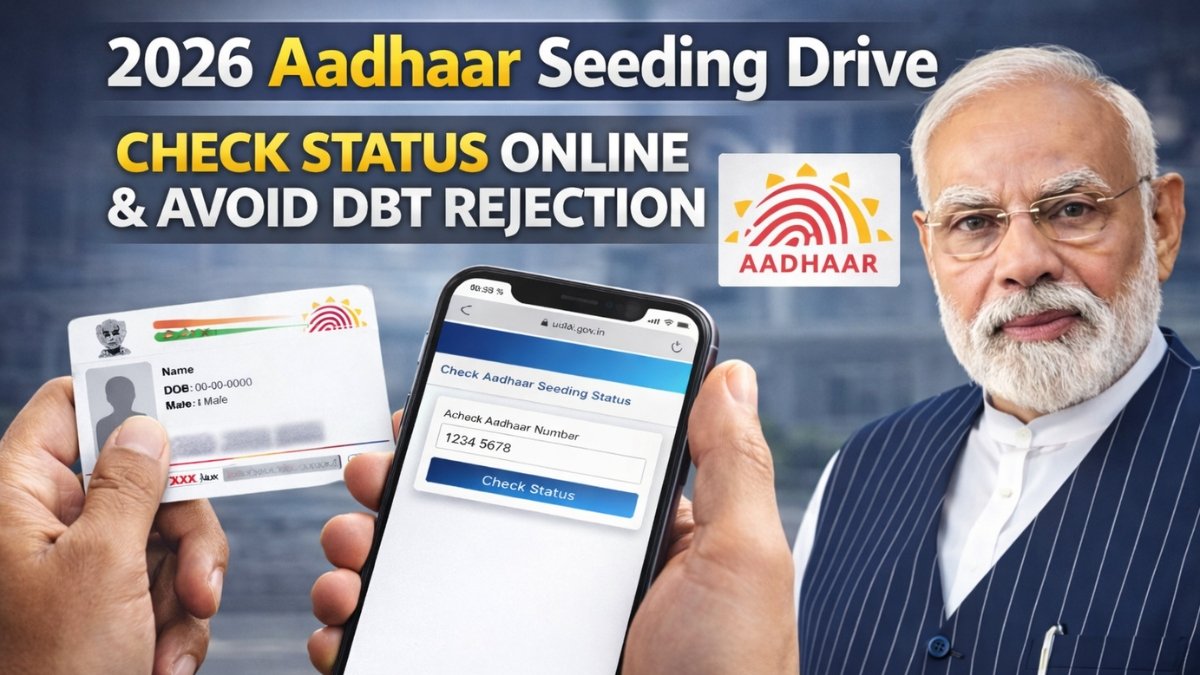
2026 Aadhaar Seeding Drive: The 2026 Aadhaar Seeding Drive has become an important update for millions of beneficiaries receiving government scheme payments. If your Aadhaar is not properly linked with your bank account, you could face delays or even rejection of Direct Benefit Transfer payments.
With DBT being the backbone of subsidy and welfare transfers in India, ensuring correct Aadhaar seeding is no longer optional it’s essential. Here’s everything you need to know to stay safe and avoid payment issues.
Why Aadhaar Seeding Matters Now
Government benefits such as pensions, scholarships, LPG subsidies, and welfare payments are credited through the Direct Benefit Transfer system. For DBT to work smoothly, your Aadhaar number must be correctly linked to your active bank account. If the seeding is incomplete or mismatched, payments may fail or get rejected. The 2026 drive focuses on cleaning outdated records and ensuring beneficiaries receive funds without interruption.
What Is Aadhaar Seeding
Aadhaar seeding simply means linking your Aadhaar number with your bank account and other welfare scheme records. This linking helps the government verify identity and directly transfer benefits without middlemen. It reduces fraud and ensures the money reaches the right person. However, even small mistakes in name spelling or mobile number mismatches can create issues, which is why checking your status is important during this drive.
How To Check Status Online
You can easily verify your Aadhaar-bank linking status online without visiting any office. Visit your bank’s official website or use net banking and mobile banking apps to check whether Aadhaar is linked. Many banks also provide SMS-based confirmation services. Additionally, you can visit the UIDAI official website and use Aadhaar authentication services to confirm whether your bank account is mapped for DBT purposes.
Common Reasons For DBT Rejection
DBT payments may fail for several reasons. The most common issue is Aadhaar not being linked with the correct bank account. In some cases, beneficiaries have multiple bank accounts, and the wrong one is mapped for DBT. Mismatched details such as name spelling differences, inactive bank accounts, or unupdated KYC can also cause rejection. Regular verification helps prevent these avoidable problems.
How To Fix Linking Issues
If you discover your Aadhaar is not properly seeded, visit your bank branch with your Aadhaar card and bank passbook. Request Aadhaar seeding and ensure KYC details are updated. After submission, ask for a confirmation receipt. Some banks also allow Aadhaar linking through ATM machines, internet banking, or mobile apps. Once updated, it may take a few days for the mapping to reflect in the DBT system.
Keep Documents Updated Always
To avoid future rejections, ensure your Aadhaar is linked to your active mobile number. This helps you receive OTP alerts and payment confirmations. Keep your bank account active and avoid long inactivity. If you change your bank account, inform the scheme authority immediately. Maintaining updated records ensures smooth benefit transfers under the 2026 Aadhaar Seeding Drive.
Beneficiaries Who Must Act Fast
Senior citizens receiving pension, farmers under subsidy schemes, students getting scholarships, and beneficiaries of welfare programs should urgently verify their Aadhaar-bank linking. Any delay could impact monthly payments. Since DBT is used for most central and state schemes, proper seeding is essential for uninterrupted financial support.
Final Word: 2026 Aadhaar Seeding Drive
The 2026 Aadhaar Seeding Drive is a crucial step to ensure error-free Direct Benefit Transfers. Taking a few minutes to check your Aadhaar linking status online can save you from payment delays and rejections. Stay proactive, update your records, and confirm your bank mapping to secure your benefits. A small verification today can protect your income tomorrow.